The Overacheiver's Secret: Healing After Addictions and Bulimia Featuring Cheri Garcia [Podcast Transcript]
Dec 05, 2025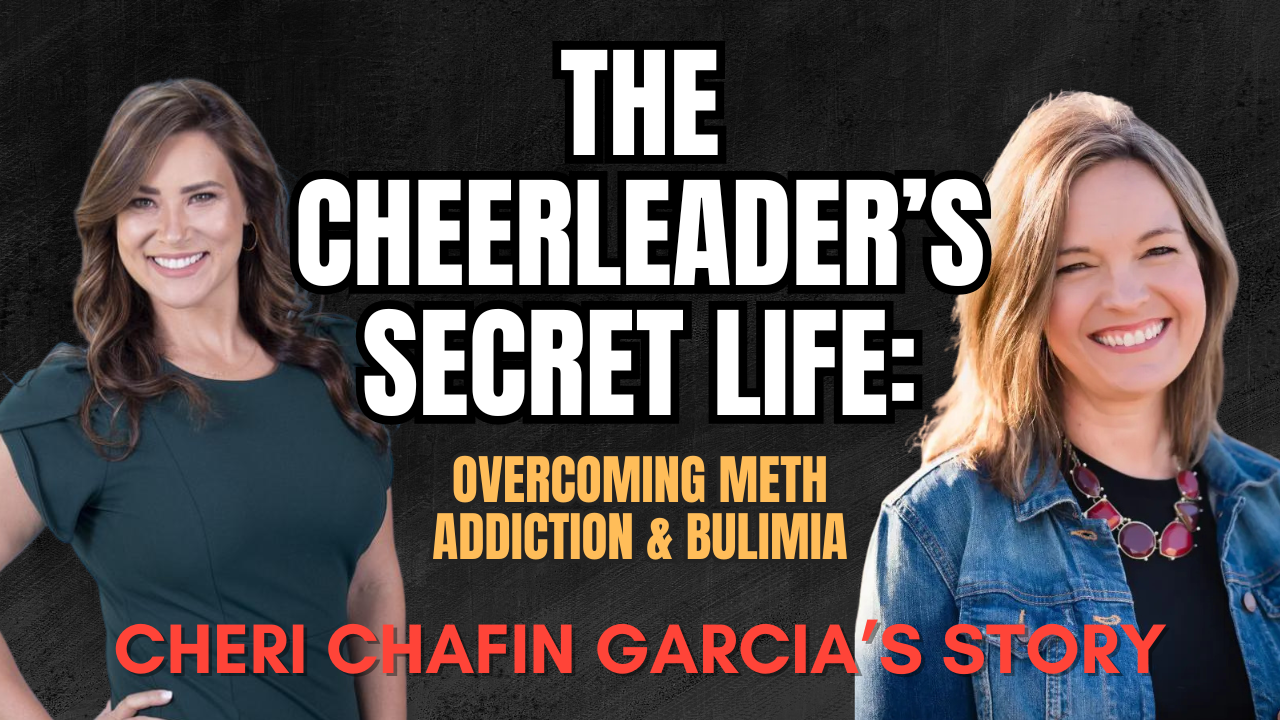
Title: The Overacheiver's Secret: Healing After Addictions and Bulimia Featuring Cheri Garcia [Podcast Transcript]
Podcast Date: December 5, 2025
Listen Here:
Description
This powerful episode of the Compared to Who? podcast dives deep into the story of Cheri Garcia, a nationally recognized recovery advocate, entrepreneur, and the founder of Cornbread Hustle. Cheri joins Heather Creekmore to share her extraordinary journey through addiction, bulimia, and the relentless pursuit of approval and achievement.
What You’ll Hear:
-
Cheri’s Hidden Struggles: From a “typical” all-American upbringing to battling addiction, reveals how her father’s meth use triggered a desperate search for approval, leading her down her own path of substance abuse. She opens up about her history with meth, alcohol, and bulimia, as well as the shame that hid behind her achievements.
-
Entrepreneurial Escape: Despite her addictions, Cheri became a successful entrepreneur, starting businesses—even while still in high school. Listen as she describes how workaholism became a new kind of drug, and why success could never satisfy her underlying wounds.
-
Rock Bottom & Surrender: Cheri’s story takes a pivotal turn after a DWI arrest, propelling her toward sobriety. She shares the moment on Christmas Day when she chose to give herself the “gift of sobriety” and the spiritual awakening that followed, including a haunting worship song, a powerful Bible verse, and a deep confrontation with God.
-
Breaking the Shame Cycle: The conversation explores the difference between guilt and shame, the importance of vulnerability vs. mere transparency, and why secrets keep us sick.
Cheri explains how confessing your struggles—no matter how dark—can set you free.
-
Mental Health and Medication: In a refreshingly honest discussion, Cheri talks about her journey with mental health and the complexities of accepting help, including medication, after years of trying to "pray harder" through her pain.
-
Community & True Friendship: Hear how authentic community, especially among women in recovery, helped Cheri finally accept herself without needing to "offer" anything.
Key Takeaways:
-
Recovery is often a journey of switching unhealthy fixes for healthier, but sometimes still unsatisfying, ones.
-
Healing from shame requires bringing secrets into the light and embracing community.
-
Vulnerability—not just transparency—is where true transformation happens.
-
Sometimes faith and mental health treatment go hand-in-hand, and there’s no shame in seeking help.
-
You are worthy of love, friendship, and community, apart from your achievements.
Resources & Links:
-
Connect with Cheri on Instagram: @luminous_cheri
-
Find out about We Share: weshare.org/heather
A Note from Heather:
If you find yourself struggling with addiction, body image, or feeling like you have to achieve to be worthy, let this episode remind you: You’re not alone. There is hope, healing, and community waiting for you.
Listen & subscribe for more honest stories that help you stop comparing and start living!
Discover more Christian podcasts at lifeaudio.com and inquire about advertising opportunities at lifeaudio.com/contact-us.
Transcript
Disclaimer: This transcript is AI-generated and has not been edited for accuracy or clarity.
Heather Creekmore [00:00:01]:
Sherry Garcia, welcome to the Compare to podcast.
Cheri Garcia [00:00:05]:
Hello. I'm so glad to be here. Thanks for having me, Heather. Yeah.
Heather Creekmore [00:00:08]:
Well, I'm excited about the opportunity to hear your story. I know it's an interesting one and we're having a good time this month just hearing different women's stories, sponsored by We Share. I'm excited to hear yours. Will you just give us a taste of who's Sherry Garcia and what she's been through?
Cheri Garcia [00:00:29]:
Yes. Oh, what I've been through. Oh, my gosh. So I was your typical girl that was a cheerleader. I was in softball. I did pageants. My parents had a pretty good income, so I. And I lived in a good neighborhood.
Cheri Garcia [00:00:49]:
And my dad was pretty religious and strict. So when somebody had mentioned to me that he was using meth, I didn't believe it. And I did start noticing that his behavior was changing. I was the girl that went to AutoZone with him, watched him change the oil in the car, and I'd go to every errand that he would run, and he started inviting me less and less. And that's what happens when people have an addiction. They. They want to isolate and get away from everyone so they can use. And so I decided that I would become the center of my dad's world since drugs became the center of his world and I became his drug dealer.
Cheri Garcia [00:01:33]:
And in that process, I became very addicted to drugs. So as a high schooler, I was just trying to earn my dad's approval and barely making it through high school. And I still got good grades because I would use the drug and stay up all night and do my homework. But I had a lot of truancy because I started my first business while I was in high school. Like, a lot of people think that just because somebody's on drugs or an addict or has alcoholism, that sometimes people will get that view that it's somebody with like a brown paper bag under a bridge or something. You know, it. It can get that way that can become your bottom. But it starts somewhere.
Cheri Garcia [00:02:22]:
And for me, alcoholism was. And meth addiction or cocaine addiction was very prevalent through my business ventures and such. So I did end up getting arrested not a million times, but probably like 14 times. And I. It was for petty theft. I never got a felony or like just warrants. And I finally. One arrest was one too many.
Cheri Garcia [00:02:51]:
I finally just quit cold turkey. I didn't go through a 12 step program or rehab, which, looking back, I wish I would have because getting rid of the substance is just part of the problem. I needed to Understand the root of what made me want to feel different. And I never did that. So I stepped into a new addiction, which was entrepreneurship and success and achievement. I ended up getting a new a job in the newsroom. I did the PR for all the Mark Cuban shark tank companies, invented a product. I just did a whole bunch of stuff.
Cheri Garcia [00:03:31]:
And no matter how much I achieved, it was like it was never enough for me. So I just kept trying to achieve and achieve, all the while being very rebellious. So it's interesting, because a lot of very successful people, they don't want to look dumb. I, for some reason, didn't really have a problem with looking dumb or being rebellious or being in trouble. But I, by golly, I wasn't fixing the fail in business. And so fun. Finally, I got an opportunity to volunteer for the prison entrepreneurship program. I felt like I was a really good leader at the time.
Cheri Garcia [00:04:10]:
I was wrong. I wasn't. But I felt like because I didn't use meth anymore, and I grew some businesses that I could go in and help people, and I did. God used me to help people, but I just wasn't the greatest leader because I was drunk or all the time, and I was trying to fix other people to avoid fixing myself and pouring into other people while filling myself back up with alcohol. And so I decided to create the staffing agency for second chances when I saw people getting out of prison and struggling to find employment. And during the first three years of running this business, I got a DWI in the middle of the day in broad daylight. And that was the journey for me to. To really quit drinking.
Cheri Garcia [00:05:01]:
Because even though I felt like I wasn't doing anything wrong because alcohol is legal, and I thought I was just working hard and playing hard, but God couldn't reach me while I was impaired, My WI FI signal to heaven wasn't as strong. And so I had to get rid of the alcohol in order to hear God, in order to heal. And so fast forward to today. I am almost seven years sober. I did get sober on Christmas morning of 2018. I just woke up one day, not one day on Christmas day, and decided to give myself the gift of sobriety. And I did not know I would keep it up. But here we are, seven years later, and, yeah, everything's better.
Cheri Garcia [00:05:46]:
My life is better all around.
Heather Creekmore [00:05:48]:
Amazing. Amazing. Thanks for sharing that. So how did God get a hold of you?
Cheri Garcia [00:05:55]:
So I. On Christmas morning of 2018, I decided, okay, I think I'm gonna be done drinking for a while. My. I was just deciding for a While. And one week later, it was New Year's Eve. Usually New Year's Eve wasn't too hard for me because I felt like that was for amateurs and I wasn't gonna go get drunk and party on the amateur night. And I was the type that drank all the other nights of the year, but not that night, because I wanted to at least start the new year with good intentions. And I was struggling, though, because I had already gone a week without alcohol.
Cheri Garcia [00:06:42]:
And knowing that I made a commitment to not drink. Seeing everyone in my feed talking about going to parties and all of that was really triggering for me. And so I was like, okay, I just need the sun to go down. Because that's how I stayed sober at first. Every day I would figure out, what can I do until the sun goes down. Because once the sun goes down, I can just crawl into bed, even if it was only 8 o'. Clock. And I saw that there was a church service on New Year's Eve, and I thought to myself, well, number one, who goes to church on New Year's Eve? So I was like, is anyone even going to be there? I thought, well, there will be music, there might be food, and I could hear a good sermon, a message.
Cheri Garcia [00:07:34]:
And so I went there. And I had no relationship with God really, ever. I know that I always knew there was a God, and I always, like, prayed to God, but there was no relationship. And I was the person that would skip worship and just come for the message. And if the message was boring, leave halfway through it, okay, I was going just to hear something to inspire me. I needed the prosperity preachers for a while, which that's why I don't like when people talk bad about any type of pastor, because some pastors work for some people in their journey. And so for a while, I needed those pastors that only preach positive activity. And I was just wondering why everyone had their arms in the air to worship music.
Cheri Garcia [00:08:23]:
It was just so weird to me. I just felt like, man, are they that desperate to. To really believe in a higher power? Like, they seemed desperate to me, which is what we are. We are desperate for God's love. And I do feel a sense of desperation when I'm worshiping now. But back then I was like, what are. They're crazy. But as the worship music kept going, a song came on, and it was called Come Alive, Dry Bones.
Cheri Garcia [00:08:53]:
And tears just started coming out of my eyes. I was like, my eyes are wet. What's this like? It was like uncontrollable. Like tears were coming out, even though I didn't feel anything. So first the tears came. Then I felt what people describe as the Holy Spirit. I get it now. I know what that feels like.
Cheri Garcia [00:09:11]:
And. And I just thought to myself, my bones are dry. Like, I'm dead. Like, I am completely dead on the inside. And it was just a weird moment. And then the pastor came out, and he always. Every year, he had declared, it's the year of this, it's the year of that. And he declared it to be the year of second chances.
Cheri Garcia [00:09:34]:
And I was like, that's interesting, because I didn't know if my Second chance staffing agency was going to make it. I had a DWI and I was broke, and my car was being repoed, and I had breathalyzer in my car. And I thought, oh, this is a sign. So I, like, really paid attention to the message. And. And then he, out of nowhere, said, I'm gonna do something I've never done before, and my wife is going to kill me and my staff is going to kill me. But I just feel like God just put it on my heart. But how about we have church every night for the next seven nights to really kick off the new year? And I thought that's excessive, but I thought, that's.
Cheri Garcia [00:10:14]:
That's seven more nights that the sun can go down and I can stay sober. And so just during that time, someone gave me a Bible. And I even. I still have it. It says in the front page, 2019, the year of second chances. And I was doing my hair in the back. I was in the mirror doing my hair, like, two weeks later. And this thought had come in my mind, like, it wasn't that hard to avoid alcohol.
Cheri Garcia [00:10:46]:
And I was like, is that you, God? And I was like, whatever. And I just kept doing my hair, and I kept feeling this nudge to go look in my Bible. And I went in my bedroom, and the Bible wasn't there. So I was like, well, I'm not going downstairs. So I went back and kept doing my hair. And, like, it was like, literally the light bulb even flickered. And even if it was a coincidence, oh, well, it still scared me enough to be like, okay, I'm going to go downstairs. I'm going to look in this Bible.
Cheri Garcia [00:11:13]:
And I did the whole baby Christian thing where I just said, God, if you're trying to talk to me, and if you're telling me that it's you that's helping me not drink, then you got to prove it to me. I'm going to open the Bible and whatever I land on that will tell me. And I. I landed on Proverbs 20. Wine is a mocker, Beer is a brawler. Whoever is led by it is a stray. And I started bawling, and I threw my Bible at the wall and I fell down to the ground. And I was screaming at God, just telling them, help me.
Cheri Garcia [00:11:45]:
Then. Then help. I was so angry at him. And usually I can't tell this story without crying. I don't know how I'm doing it now, but I would. I just remember that moment. I was just so, so mad at him. Like, okay, I get it.
Cheri Garcia [00:12:01]:
Invisible guy. You're watching me. You see me. You know that I know that you know that I know that I can't drink, but why are you making me want it so bad? Then take this thorn out of my side. Like. Like, help me. And I did later learn that the thorn in my side is what gives me strength and it draws me closer to God. So I went from hating the thorn in my side to now I feel like my alcoholism is an absolute gift, and it's what brings me closer to God every single morning.
Cheri Garcia [00:12:31]:
Because I do still have to take it one day at a time. And I know that a lot of your listeners are in recovery from other things, and they take things one day at a time as well. I also struggled with body dysmorphic disorder, and if I'm being honest, I still struggle with it a lot today. Last night, I went to an event, and people kept telling me I looked really great, but I felt sick, sad, because I felt like I looked horrible in every picture that I took. And I have to be really careful because no matter what addiction you have, you're trying to get away from how you feel. And there was. When I was working in the newsroom, I was binging and purging. I couldn't feel good about myself if I ate food, if the food was unhealthy, then I needed to binge and purge.
Cheri Garcia [00:13:20]:
And that was the only way that I deserved it. It was like a form of. Of self punishment. And with the alcoholism, I felt like I couldn't like myself unless I drank. Like, I literally hated myself. If I was sober, it was. I used to do my makeup with the lights off, sitting in my living room with no mirror. I could just do my makeup just like that, because I just.
Cheri Garcia [00:13:46]:
I don't know, I just didn't. I just didn't like who I was. But I wasn't ready or self aware enough or vulnerable enough to admit that I still was hiding behind A mask of pride. And so to this day, all these thorns in my side, whether it's body dysmorphic disorder, eating disorders, meth addiction, alcoholism, you name it, I still haven't. I. I'm just now trying to get addicted to healthy habits. I don't know. The unhealthy habits are so much more fun and easy, but at the end of the day.
Cheri Garcia [00:14:26]:
Well, you know what? Workaholism. I do. I do struggle with workaholism, but it's not. It doesn't give me as much consequences as the alcohol. It actually makes me money.
Heather Creekmore [00:14:37]:
Yeah. Which may make it more dangerous.
Cheri Garcia [00:14:39]:
I don't.
Heather Creekmore [00:14:42]:
Yeah. Sherry, thanks for sharing all of that. I really appreciate you sharing your story so openly and honestly. You know, those of us who are always striving and then always hiding, like, a lot of times there's shame. There is that something you walk through?
Cheri Garcia [00:15:00]:
So I did struggle with a lot of shame. That's part of. So the last 10 years of running this agency, I had to learn that money, success, a job in a car is not going to keep somebody from sabotaging. And once I kept having people sabotage their promotions or success, that's when I learned that I need to create a program that helps people address whatever's causing all of this sabotage. And one of the workshops that I give is kind of addressing the difference between guilt and shame. And that guilt is okay. Guilt is a feeling guilt calls us to in action. And that action is to.
Cheri Garcia [00:15:45]:
Well, if you're a Christian, to repent, to confess and repent. And shame is just the enemy. Shame is something guilt says I did something bad, and shame says I am bad. And. And so now that I've gone through this healing journey, I don't really think I have. I don't want to say I don't have any shame. I would say that anything. Secrets do keep us sick.
Cheri Garcia [00:16:18]:
And so even if you can find somebody who's a stranger that you'll never talk to again, confessing something to bring it to the light is so freeing, because if it. If it's in the dark, it's just going to keep growing. And the reason I don't really struggle with shame today is because I don't have a single secret that I've. There's. There's not a single secret that I haven't told to somebody and that. I don't know. That's just really freeing. I think that's why the devil likes us to isolate, because he.
Cheri Garcia [00:16:55]:
He knows. The devil knows scripture better than just about anybody. So he knows that isolation will cause shame to grow. And so for me, my community, I have a recovery community. I have a biblical community. I'm very open about all of my struggles. Today, shame looks a lot different than it used to. What it used to look like was real bad.
Cheri Garcia [00:17:21]:
Like, stuff that was like, would get me canceled or fired or just thrown into prison. Like, that was some real shame today. My shame is, man, I really didn't treat my fiance good this morning. Like, and that's not even shame, it's guilt. So I don't think I carry shame anymore, to be honest with you, which is a beautiful thing. I have been freed from that, praise God. Yeah, I know we go through seasons though, right? So, like, you know, I, I'm going to try to be on the journey of becoming a mom and I don't know what that's like. I've always heard about mom guilt and I don't know at what, I don't know it to what degree that could turn into shame, so.
Cheri Garcia [00:18:09]:
And I believe that it's okay to go through those seasons because it just draws us closer to God. Every time we're in a season of letting go of a new hang up or habit, we're drawing closer to God for help.
Heather Creekmore [00:18:25]:
Amen. That's what I hear in your story over and again, is just, okay, I've got all these things, like we all do, but you've been able to turn them into, you know, okay, this is why I'm utterly dependent on God. And that's where it starts, right? I mean, until we can reach that place, we are just walking around with masks, hiding things. So I really appreciate you sharing that. So we share is all about the mind, body, soul, healing. Like, I love what they do. I love, I love the concept of just the community sharing. You're part of it.
Heather Creekmore [00:18:59]:
I know. As we talk about mind, body or soul, I'm just curious, like, what part do you think is the hardest part to keep healthy?
Cheri Garcia [00:19:10]:
Body, soul? I'll speak for myself. I think for everybody it would be different. For me it would be mind. I struggle with mental health issues pretty badly. That was something. Oh, I'll tell you my latest shame. I guess that I, I don't even know if I want to call it shame. More of a pride issue slash trust issue.
Cheri Garcia [00:19:40]:
I have been sober for almost seven years. Of course, the first couple of years I really struggled because it was my first time in my adult life to ever deal with life without any type of substances. And I did have like a lot of Suicidal ideations and stuff. But I knew that I just had to keep moving forward, take it one day at a time, things would get better. I had a lot of mentors that told me, it will get better. Well, at six years sober, when I was still having days where I wanted to just lay in bed all day because I couldn't face the world, or crying way too much, like multiple times a day, and just having, like, really high highs and really low lows, everyone was suggesting to me to get on mental health medication, and I was just unwilling because I felt like I was the transformation queen. So if I can't figure it out without medication, then I'm not the transformation queen. And I felt like if I could just pray harder, if I could just ask God for help.
Cheri Garcia [00:21:01]:
And why isn't God. Because, you know, like, biblically, it does say that God gives us the gift of peace and joy. And so I felt like I was doing something wrong, that I wasn't experiencing peace and joy. I kept feeling blips of it. Obviously, I wouldn't have stayed on this Christian path and sober path if I didn't feel little moments and blips of it. But I wasn't able to maintain continuous happiness or joy. It was probably like one day a week where I'd be like, oh, this is what it feels like. And so I did finally surrender to medication, and turns out I really needed it.
Cheri Garcia [00:21:43]:
And I was so. I had so much pride and just shame about it, too, that I just really felt like. I felt like my brain, the way it was, kept me in survival mode and got me here. So I didn't want to mess with that. I was too afraid. And God was really calling me to trust him, even though it looks different. And I know a lot of Christians are like, no, well, you could trust him and not need medication, you know, and it's like, okay, we'll take off your glasses, right, and go for a walk and trust God. You know, like, sometimes we just.
Cheri Garcia [00:22:25]:
Sometimes people need what they need. And it's really helped me give people more grace, too, because I was one of those people who was kind of like, pick yourself up by the bootstraps. That's just a band aid. Why are you doing that? And you know what? I just. I finally just. That big. That surrender, it was. It was another screaming at God.
Cheri Garcia [00:22:47]:
And that was kind of recent. It was like six months ago. Screaming at God and crying, holding the pill, saying, okay, I'll take it. But, you know, if. If. If you make me become stupid or I. You Know, pee my pants in public or what. Like, I was so afraid of what this medication would do to me.
Cheri Garcia [00:23:07]:
But turns out I just. I could have just trusted him all along and all the people he sent me to help me. And it was a lot of Christians that were like, sherry, I love the Lord too. I believe in God too, and I needed it, too. It's okay.
Heather Creekmore [00:23:21]:
Yeah. Yeah. Thank you for sharing that. Yeah. I mean, I think that's the hardest thing. I mean, any of the things we struggle with, right, is coming to the place where we're willing to say, I need help, and then taking the step to actually get whatever the help is and being open to whatever that help is. Because I think, by and large, I mean, you know, I don't know, I don't have any data on this, but the kinds of addictions that I work with, mostly with women, are, you know, addicted to image. Right.
Heather Creekmore [00:23:50]:
Or, like, addicted to restricting food or purging food. Right? Like, it's a different twist on it. But these are highly successful, highly driven, type A perfectionist. Get it all right? Do it all right? And I think the hardest thing is, like, whoa, wait, I need help. Like, I actually can't fix this on my own. Like, I've been trying to fix this on my own, or thinking I had it under control, or I was fine for years or decades. And. And so I appreciate you sharing just like that, I think will inspire someone today perhaps to stop and realize, wait, maybe I need help too.
Heather Creekmore [00:24:28]:
So thanks for that.
Cheri Garcia [00:24:30]:
A lot of times people can confuse transparency with vulnerability. They are two separate things. I was transparent for years that I had mental health issues. I was transparent that I had highs and lows. I was transparent that my anxiety was through the roof. I had a hard time moving into vulnerability, which was. And I'm going to be vulnerable and try something different and risk failing. That's where their change really happens, in the vulnerability.
Heather Creekmore [00:24:59]:
Yeah, that's solid. That's solid. And I think also in community, right? Like, because you can't. You can't be vulnerable in isolation, right? You don't have anyone to be vulnerable with. But being in community, like, how has that helped you being part of community?
Cheri Garcia [00:25:13]:
Oh, massive. There's just no way around it. I remember the sober ladies, I call them my sunflower girls because sunflowers, when the sun goes down, they turn and face each other. And I. I remember, I think I was only two years sober. And they're all like, stay at home moms. And I kept giving them unsolicited advice on what businesses they should start and that I'd invest in them, and here's how I can help it. And I didn't realize how bad that was coming off and how annoying it was, but instead of them making fun of me or, like, kicking me out of their friend group, they rolled me up into a.
Cheri Garcia [00:25:55]:
Like, a blanket burrito and tossed me back and forth, yelling at me, we don't want anything from you. We want your friendship. And I was crying because I was embarrassed, but I was. I was just really embarrassed, so it was making me really cry. And, yeah, I. I was embarrassed that. That's literally why I was crying, because I didn't really believe that. I didn't believe that I was worthy if I didn't have anything to offer.
Cheri Garcia [00:26:22]:
And so for the longest time, I really struggled to have friends without a transaction, and now I get to do that. And that was all, again, another blessing from that thorn in the side of alcoholism. I wouldn't have met those women to teach me that, and they gave me enough grace and patience to know that I was just an alcoholic wearing a mask. Normal, everyday friends probably wouldn't have given me the grace and the patience because they would have just been like, I'm not hanging out with that boastful, arrogant, prideful lady who keeps telling me to start a business when I don't want to.
Heather Creekmore [00:27:05]:
I love that. I love that story. And, you know, I think anyone on the other side can learn from that, too.
Cheri Garcia [00:27:11]:
Right? Like.
Heather Creekmore [00:27:13]:
Like, we all need someone to care.
Cheri Garcia [00:27:16]:
Yeah.
Heather Creekmore [00:27:16]:
Right. We all need someone to care.
Cheri Garcia [00:27:18]:
So that's one thing that I've learned. I've started doing. If somebody's going on and on and on and on about something, I just let them. I just let them be. Like, just let them be. You don't have to always tell somebody they're annoying or they're wrong or they talk too much. Just. Just let them be.
Heather Creekmore [00:27:37]:
Yeah. Yeah. We all just want someone to hear us and see us and know us.
Cheri Garcia [00:27:44]:
Right? Yeah.
Heather Creekmore [00:27:46]:
Sheri, this has been super interesting, super helpful, I think. Super encouraging to my listeners. Any final thoughts as we close up?
Cheri Garcia [00:27:57]:
No, just. I'm just really excited for the demographic of listeners that are listening to this, because once upon a time, I never. I didn't even like talking to women or I always wanted to just help men, but that's because I lacked vulnerability. But now that I'm on the other side, all I want to do is talk to women, because I want so bad for other women to have what I have, and anybody can reach out to me anytime on social media, DM me anywhere and I'm happy to have a conversation with you.
Heather Creekmore [00:28:29]:
Oh, I love it. Tell us your handle. I'll put it in the show notes, but tell us your handle for anyone driving.
Cheri Garcia [00:28:35]:
Instagram. Luminous. Like the sun is luminous. So luminous. Underscore Sherry C H E R I got it.
Heather Creekmore [00:28:42]:
I'll put it in show notes. Sheri, thanks again so much for being here today and sharing your story.
Cheri Garcia [00:28:48]:
Oh, thank you so much Heather.
Heather Creekmore [00:28:50]:
And thank you for watching or listening today. I hope something today has helped you stop comparing and start living. Bye Bye.
Tired of fighting your body image issues alone? Do you know that you're "fearfully and wonderfully made," yet still feel like your body isn't good enough?
Sign up here for weekly encouragement and take the 5-Day Body Image Challenge!